“You cannot know what love is unless you are in love with Istanbul”
(Sultan Abdul Hamid Han)
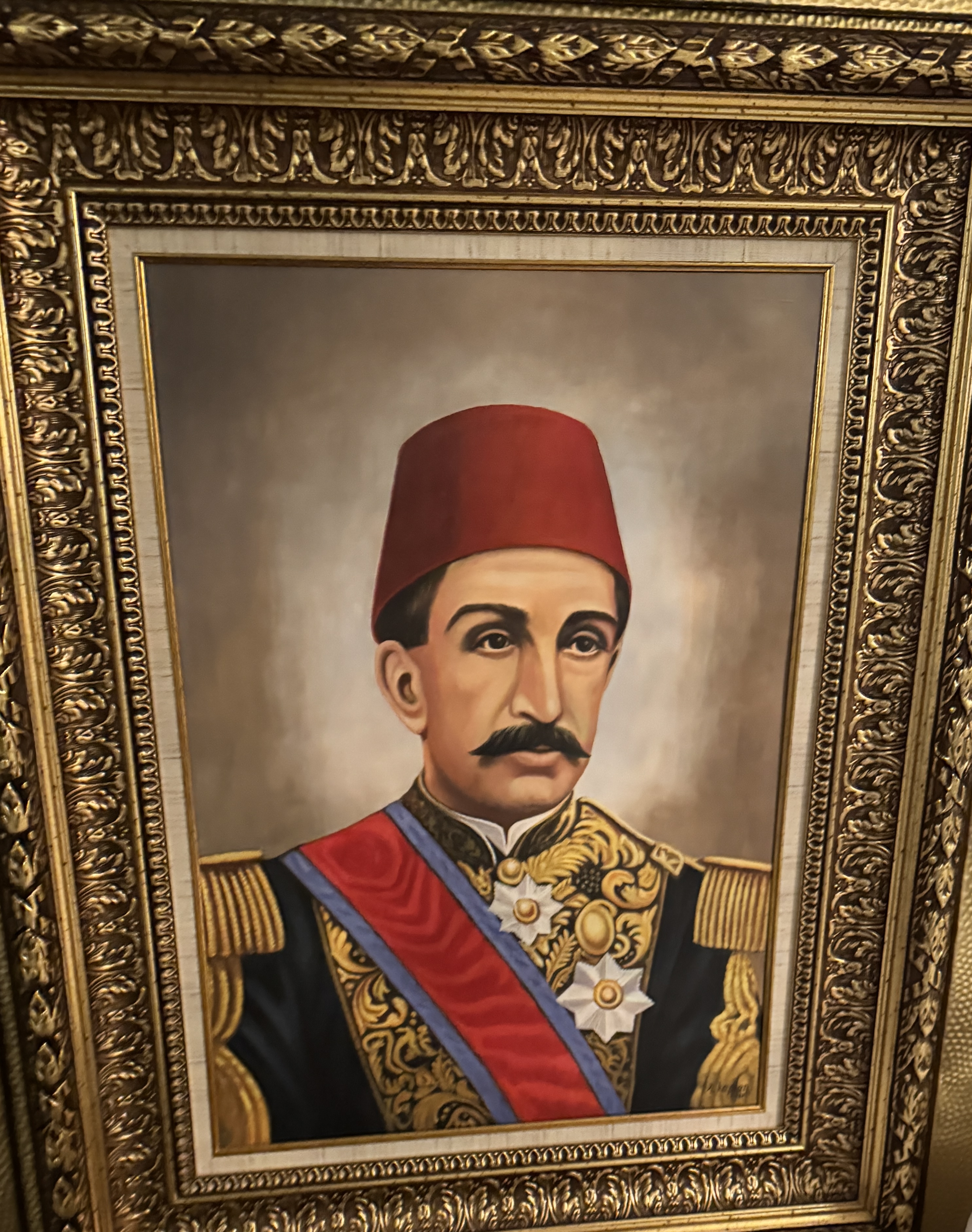
A Picture of Sultan Abdul Hamid Han Hazretleri at the Restaurant of His Great-Great-Granddaughter
Istanbul is one of the great beauties of the world, both spiritually and aesthetically. For us Muslims, Istanbul served as the capital of our faith for many centuries. It has been the birthplace of millions of scholars and spiritual giants. In Istanbul, one can witness the manifestation of the beauty of our faith: the mosques, the schools, and the great architectural monuments. For us, it represents what Ihsan truly is.
You could write thousands of pages on Islam, but one glance at the Süleymaniye Mosque transports you to another world. For Muslims who have grown up in the West, we deeply crave the public expressions of Islam, hasn’t Turkey done wonders in this regard?
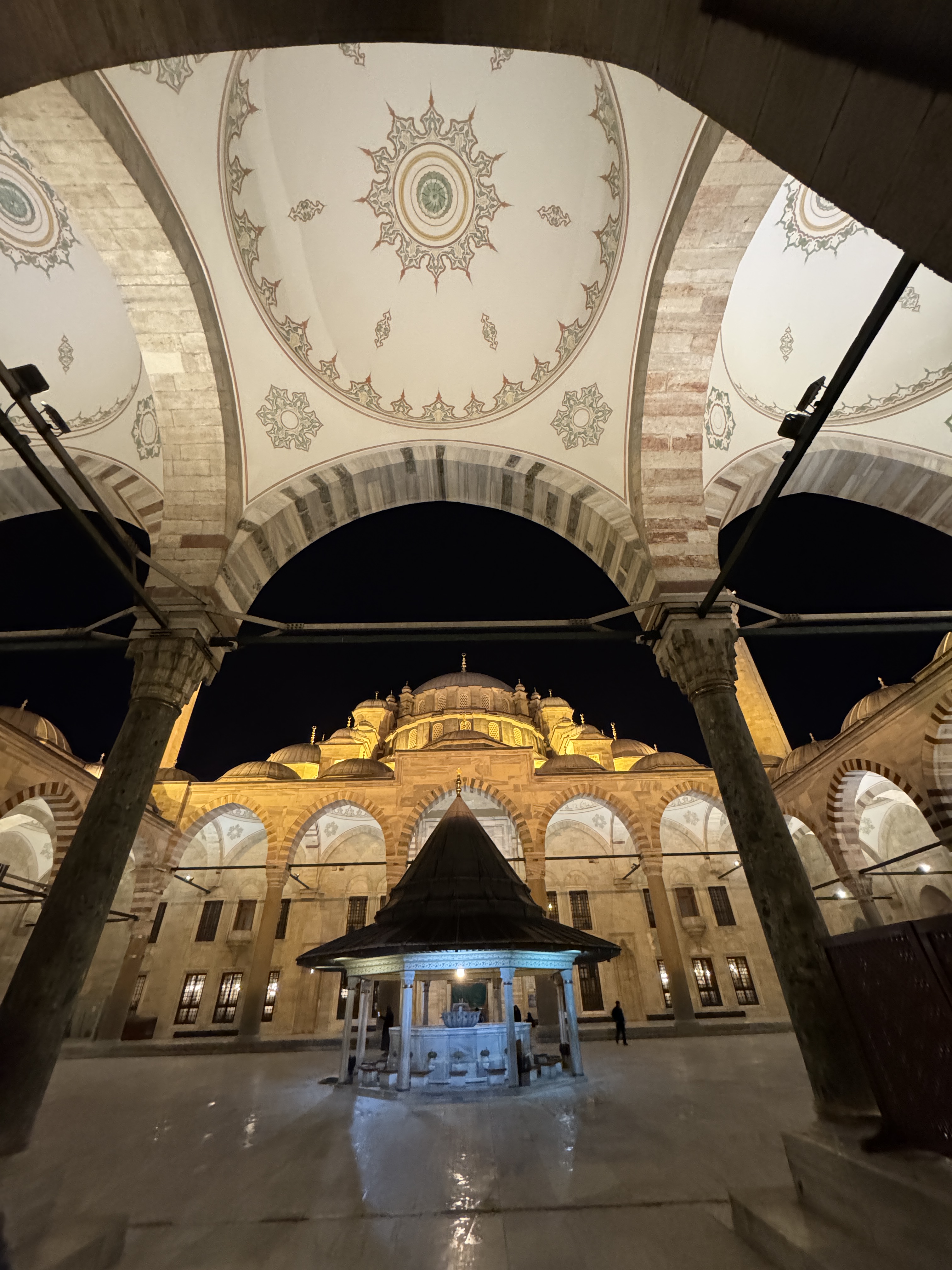
The great Mosque of Fatih, built by Sultan Mehmet himself in 1463
Istanbul is home to over 3,000 mosques, and the Diyanet (Turkey’s Religious Affairs Authority) has done an incredible job in preserving heritage.
I have been to Istanbul twice before, and each time I visit, I try to check off more places from my list of must-see sites. In this short piece, I’ll share some recommendations on what to visit and how to get around Istanbul in three days.
On this trip, I was accompanied by my dear friend, Dr. Mustafa Baig of Exeter University, and his two nephews. We landed at Istanbul International Airport on Thursday night. Thankfully, we had already sorted out our e-SIMs before traveling, so staying connected wasn’t an issue. We ordered an Uber and arrived at our hotel within half an hour.
We stayed at the Golden Horn Bosphorus Hotel, which cost us around £50 for a double room. It’s a new hotel and only a 10-minute walk from Sultan Ahmet. We specifically chose this hotel because of its excellent accessibility to public transport, making it convenient to explore both the European and Anatolian sides of Istanbul, as you’ll see.
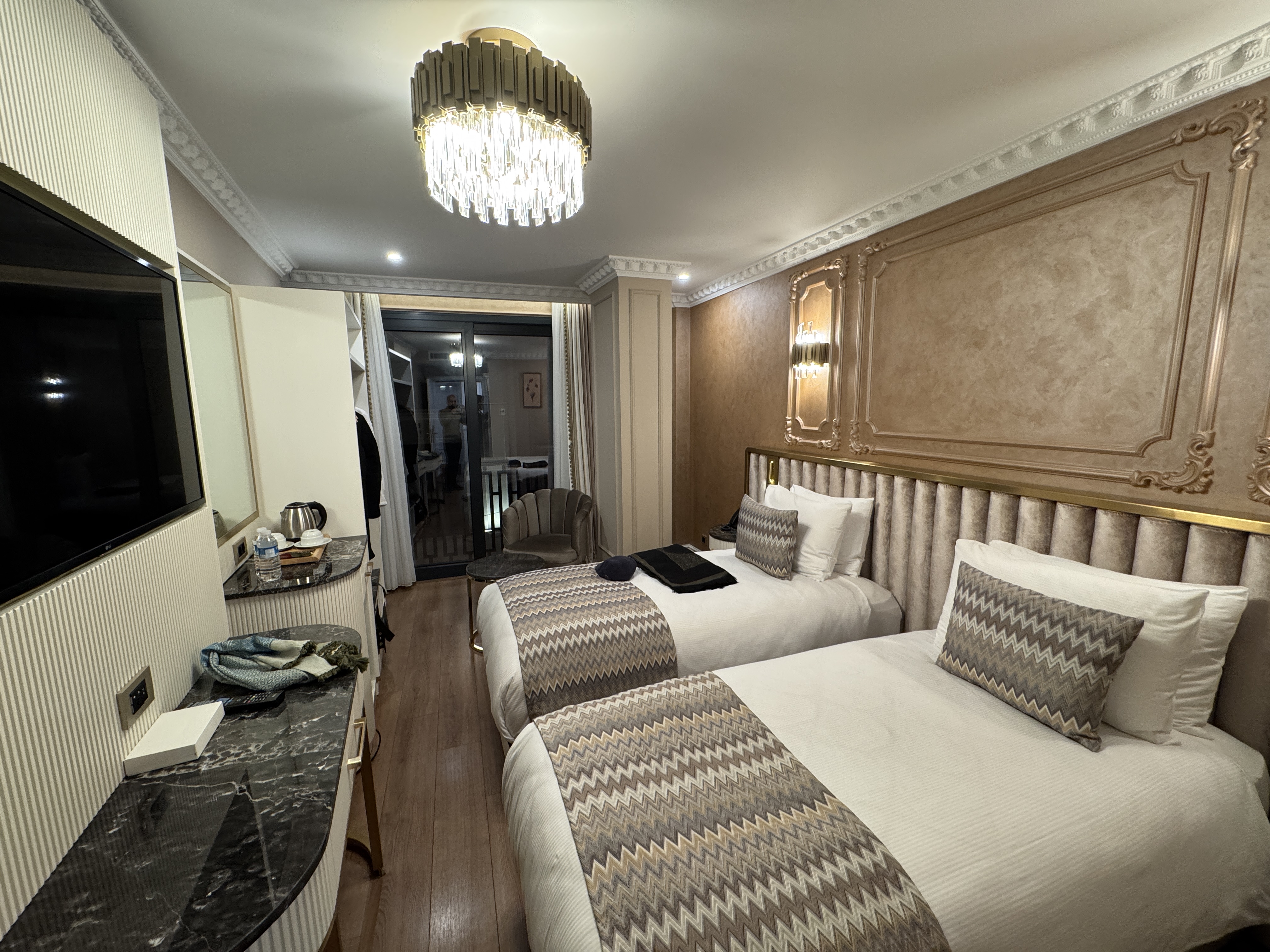
Our Bedroom at the Golden Horn Bosphorus Hotel
Being within walking distance of Hagia Sophia was particularly important for us, as it allowed us to pray there and truly experience the unique spiritual beauty of worship in such a historic setting. In Istanbul, you’ll find that prayers themselves become great events, moments of symphony that weave together many aspects of the spiritual side of our faith.
Friday
We performed our Jumu’ah prayers at Hagia Sophia Mosque, arriving about an hour early. We joined the orderly line to enter, a refreshing sight not often seen in many Muslim countries. The khutbah was beautiful, and the congregation was immense, with thousands of people coming together in prayer.
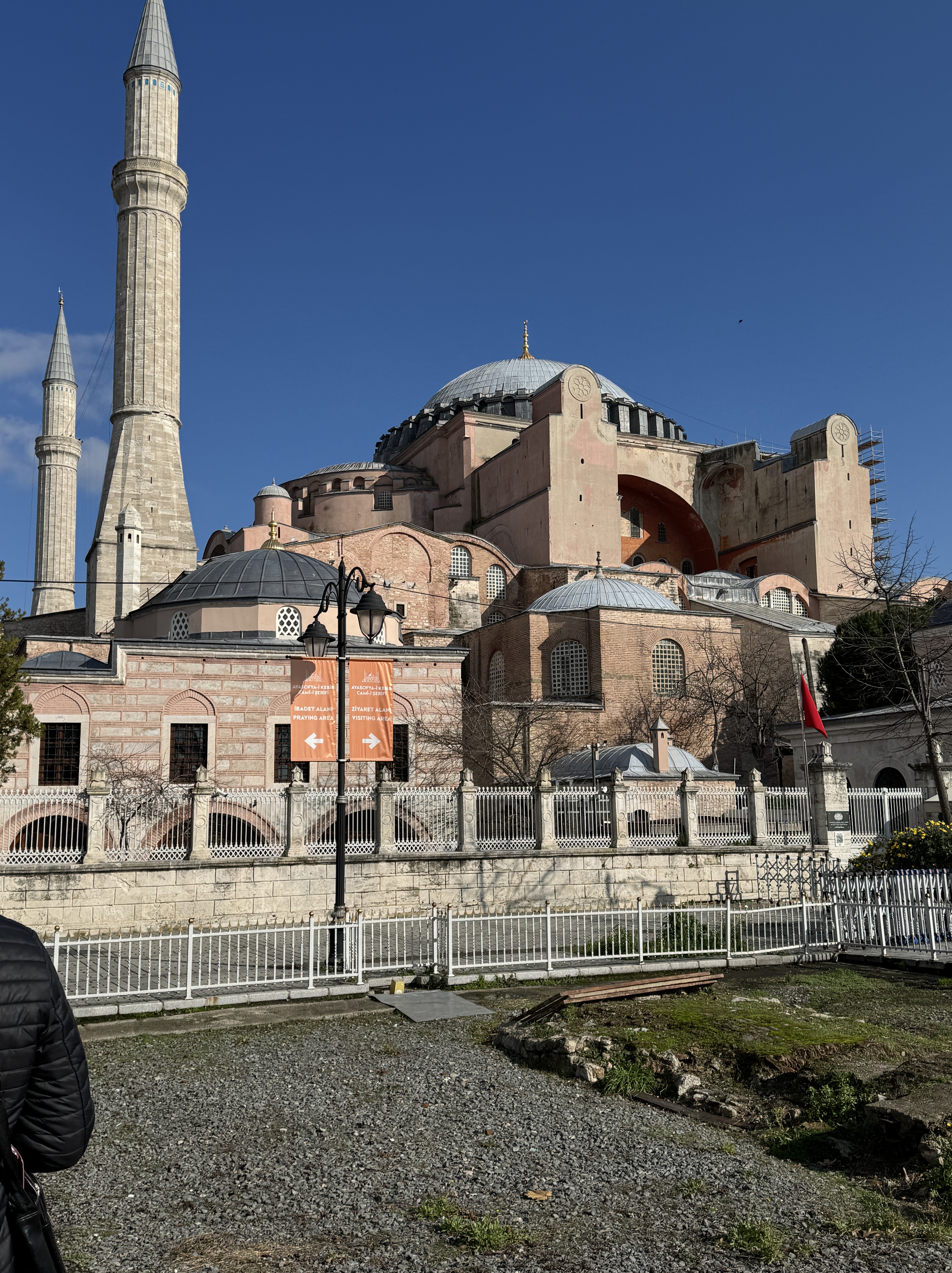
Lining up to enter Hagia Sophia Mosque for Juma
After prayers, we took a tram to Beyazıt district to meet a friend, Mamduh, a doctoral student at the prestigious Istanbul University. Trams in Istanbul are very user-friendly; you can now use your debit card to access them, making it an affordable and efficient mode of transport. In fact, public transport often gets you to your destination faster than driving.
We met Mamduh at the university, which is perhaps the most esteemed institution in Turkey. Istanbul University began as a madrasa in 1453, established by Mehmet the Conqueror after the city’s conquest. The campus is rich with history, reflecting its Ottoman heritage and prestige.
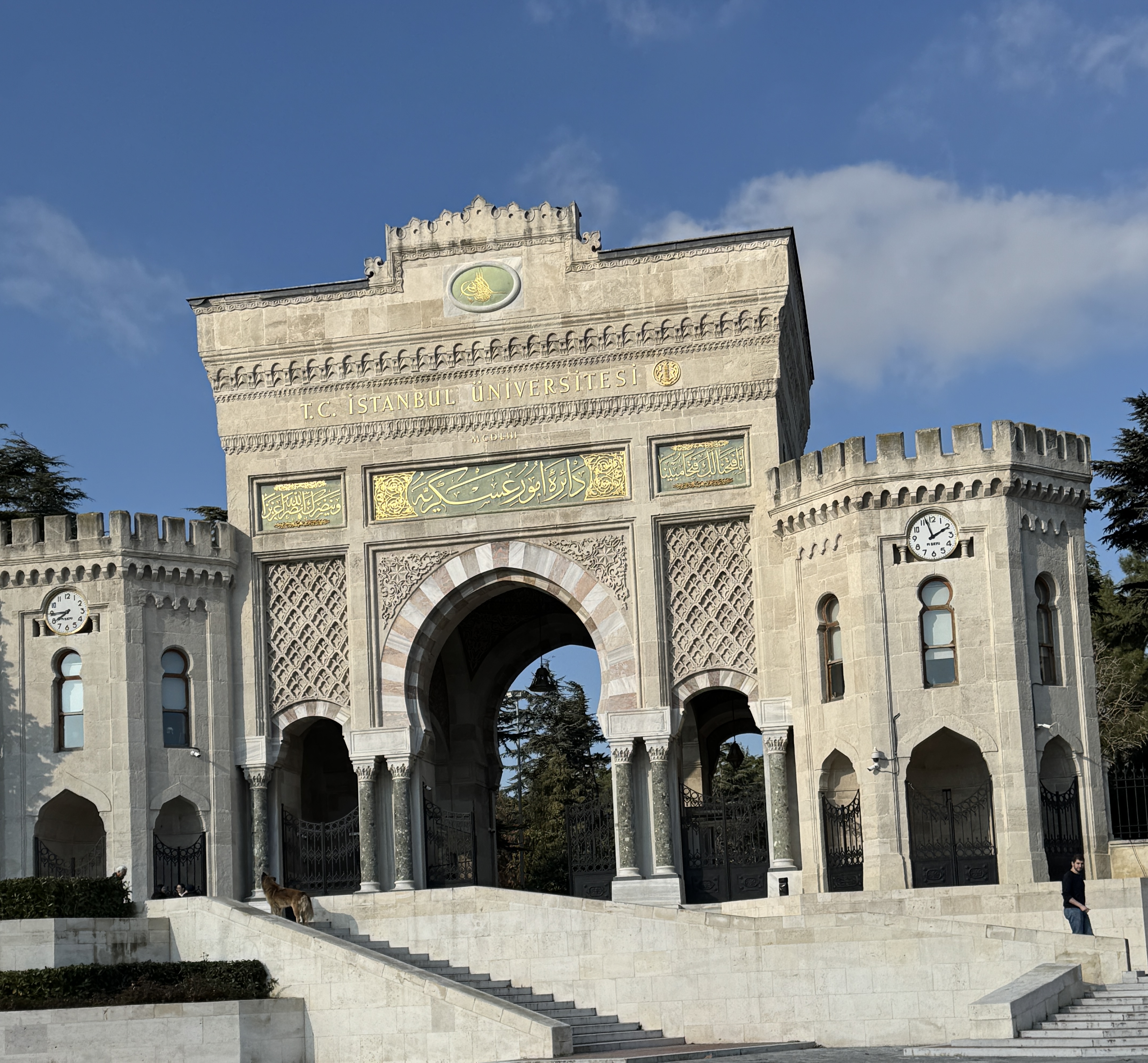
The most famous part of Istanbul University’s main campus is its iconic main gate, built in 1869
We enjoyed a lovely walk around the area and visited the Institute of Islamic Studies, which is affiliated with Istanbul University and serves as a hub for postgraduate studies. We also had the privilege of visiting the university’s library and meeting Dr. Kayapınar, the institute’s director. He completed his PhD in political science in New York, and we had an engaging discussion on topics ranging from philosophy and political theory to history and the experience of Muslims in Europe.
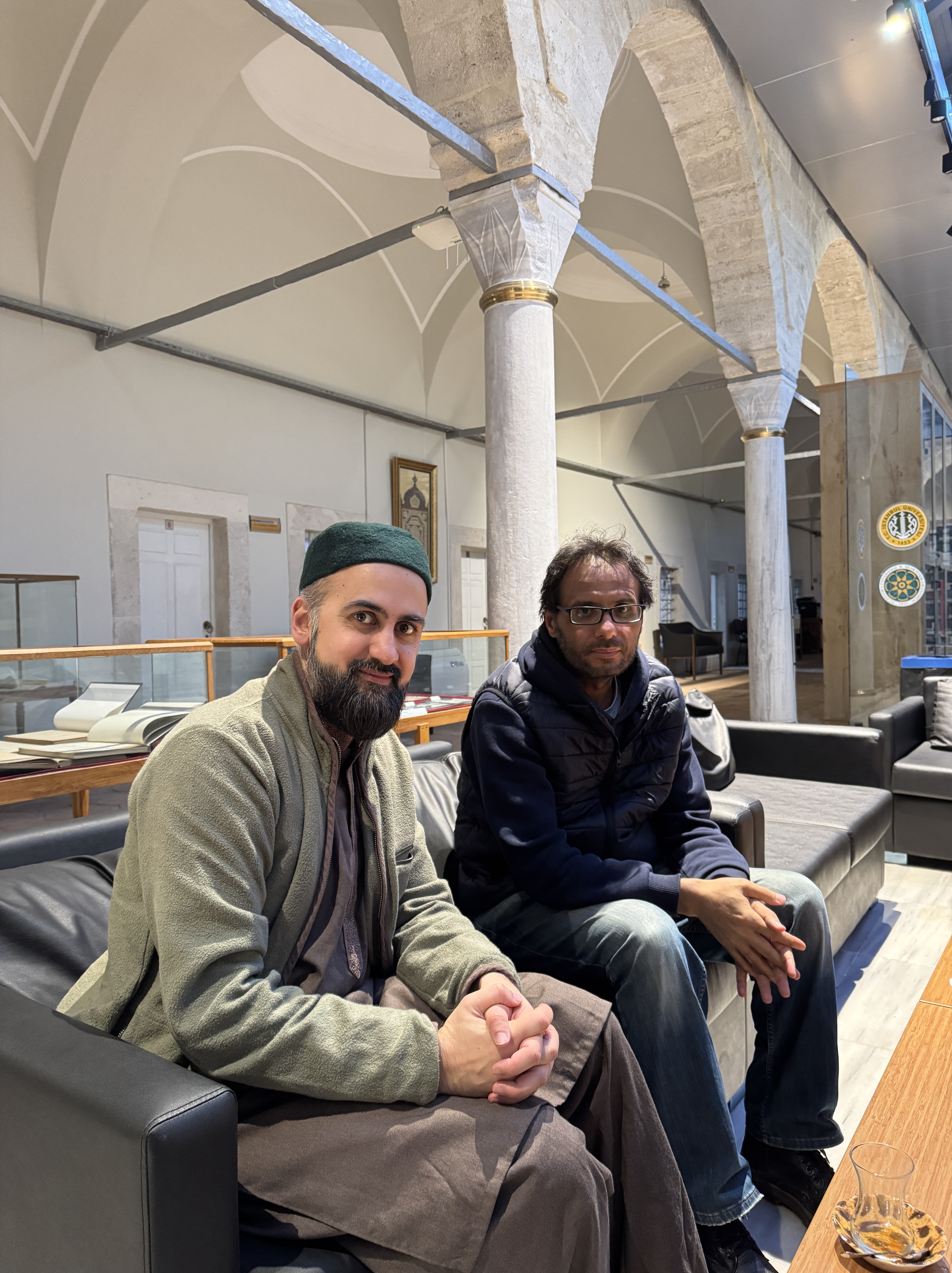
With Dr. Kayapınar, the director of the Islam Tetkikleri Enstitüsü (Istanbul University)
We then continued our journey, stopping to pray at the beautiful Ottoman Shehzade Mosque. This mosque, built by Sultan Suleiman in memory of his son who passed away at the age of 21 in 1544, is a masterpiece of Ottoman architecture. On our way, we also passed the remnants of the old Roman wall, which is still a prominent feature in the city. Built in the year 386, this ancient wall was part of a system designed to transport water throughout Constantinople.

The old Roman wall once supplied water to the ancient city of Constantinople.
From there, we drove across the city to visit the Çamlıca Mosque, crossing from the European side to the Asian side. The journey took us about an hour and a half, primarily due to the heavy traffic on the bridge connecting the two sides. The congestion on this route is significant, so I highly recommend using the underground metro or the ferry instead for a quicker and more relaxing experience. While my friends napped in the car, Mamduh and I had a fascinating conversation about Atatürk and his failure to remove Islam from the hearts of the Turkish people. How could he, when Allah chose the Turks to spread this beautiful faith for over seven centuries?
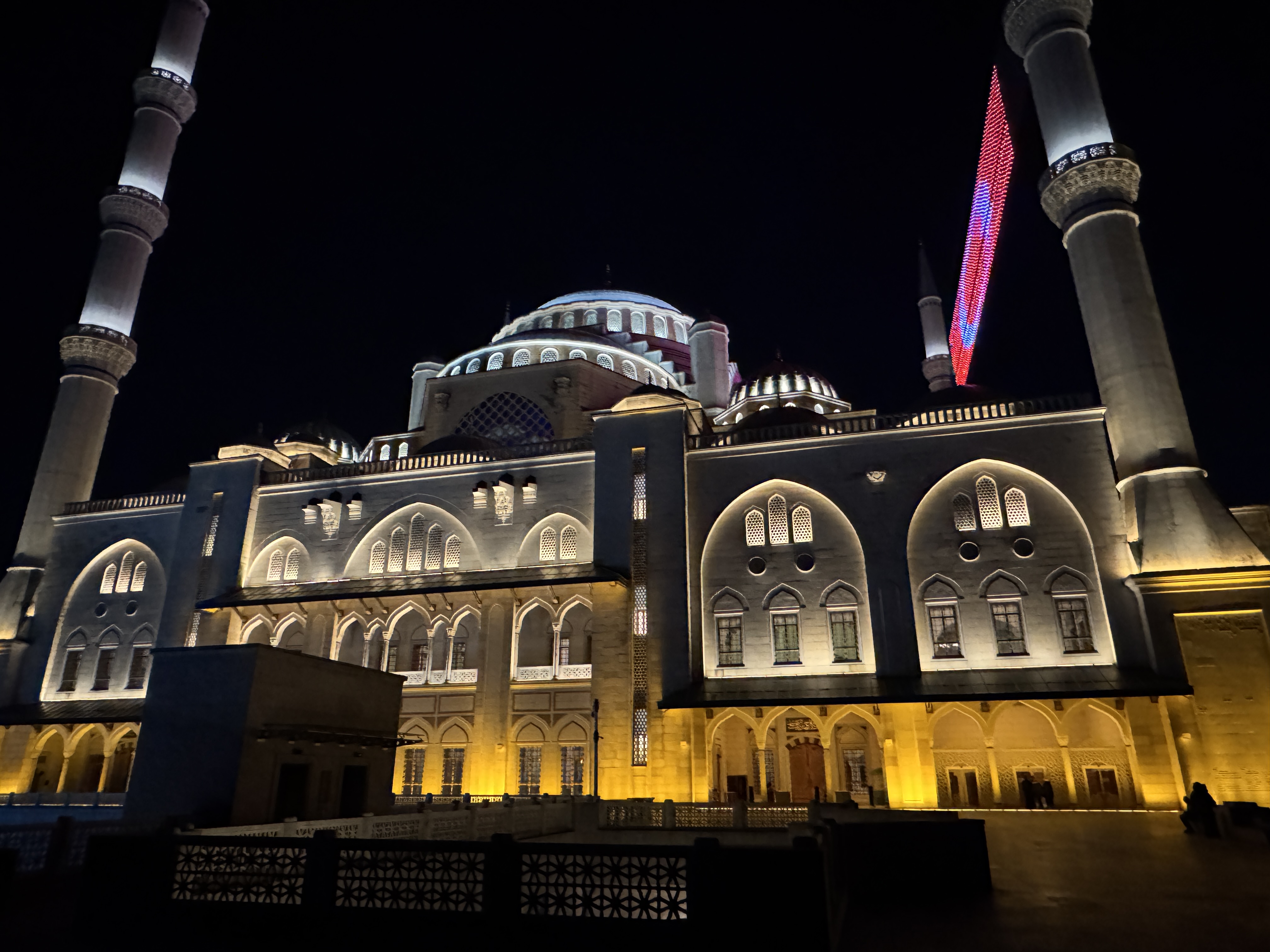
Çamlıca Mosque, the largest mosque in Istanbul, built under the leadership of Erdoğan in 2019
We arrived at Çamlıca Mosque around Maghrib time, and what an impressive sight it was! I only wished we had arrived during the day, as this mosque is a place where you could easily spend several hours. If you plan to visit, I recommend coming in the early morning to make the most of it. The mosque is not just a place of worship but a grand complex with art galleries, bookshops, cafés, and a library. It also has a large open courtyard offering stunning views of Istanbul. Completed in 2013 under the direction of President Erdoğan, Çamlıca Mosque is the largest mosque in Turkey and can accommodate up to 100,000 worshippers.
The Maghrib prayer was a truly moving experience. The muezzin, employed solely for the call to prayer, delivered a beautiful adhan, and the imam’s recitation during the prayer was extraordinary. After the prayer, there was a session of dhikr, which added to the spiritual ambiance. I recorded the prayer, as I often do when I pray in congregation, adding to my growing collection of audio recordings from places like Makkah, Madinah, Cairo, and beyond. Visiting Çamlıca Mosque was a deeply uplifting experience, and it is an absolute must-see for any Muslim traveller, it fills you with pride and confidence in your faith.
Afterward, we headed to dinner at a place I had been eager to try for some time: the Nilhan Sultan Restaurant. Nilhan is the great-great-granddaughter of Sultan Abdul Hamid II, and the restaurant has a wonderful Ottoman charm. The menu is inspired by the dishes once enjoyed by the sultans, and the food was exceptional. The sherbets we drank were particularly memorable, bursting with flavour and steeped in tradition.


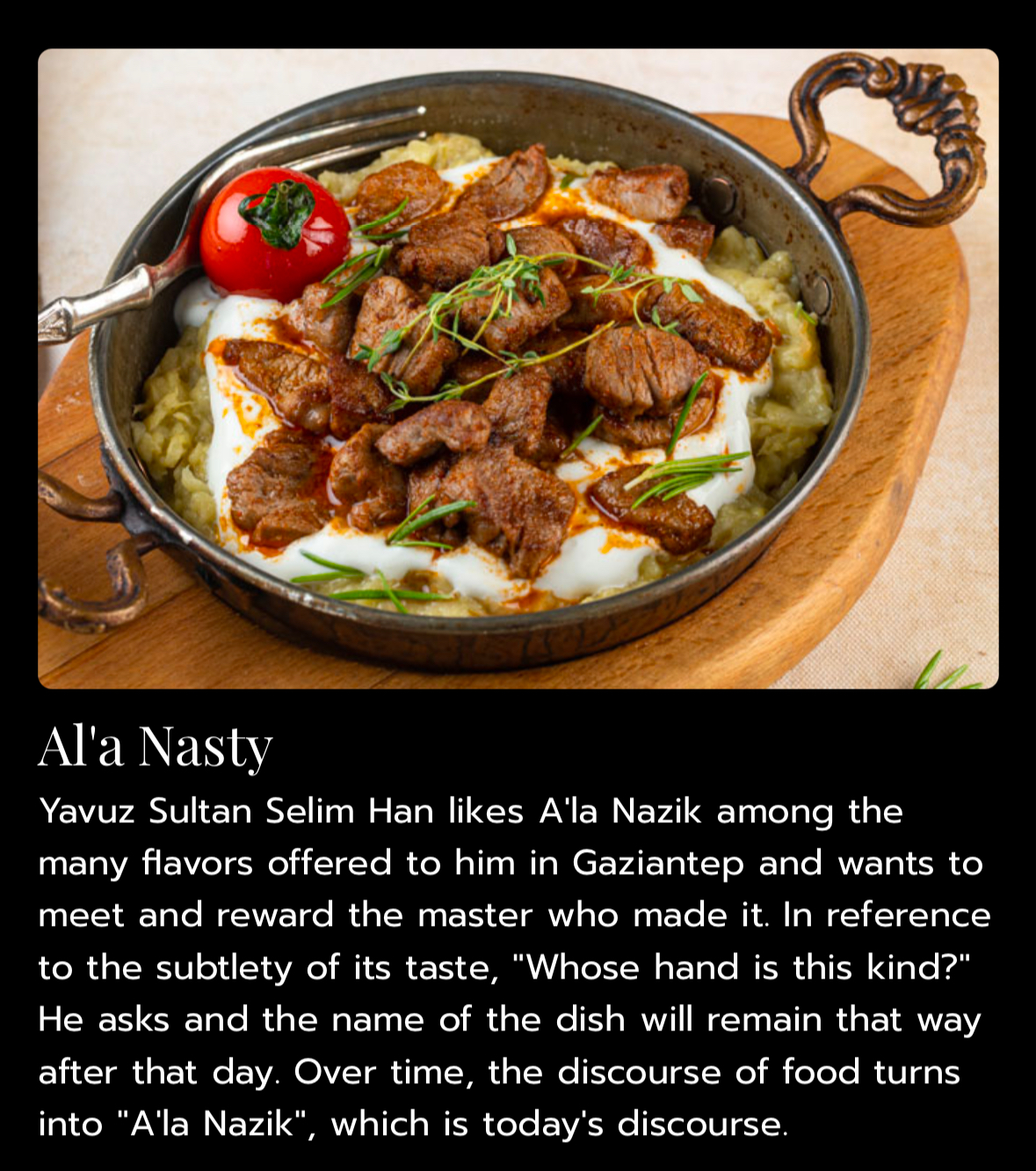
Some of the food of the great Padshahs (Ottoman Sultans) is offered at the restaurant
To walk off our meal, we visited Fethi Paşa Park, located nearby. Though we went at night, the park is known for offering some of the best daytime views of the Bosphorus. It is one of the most visited parks in Istanbul and a perfect spot to unwind after a meal.
After a long and eventful day, Mamduh dropped us off at the Üsküdar underground station. Our hotel, located in Sirkeci, was just one stop away. The Üsküdar-Sirkeci underground line is remarkable, it travels under the Bosphorus, connecting the Asian and European sides of the city. Our hotel was a two-minute walk from the station, making it very easy to get back.
The staff at the hotel greeted us warmly, and as they were religious themselves, we shared our experiences from the day. They were taken back by the places we had visited, even learning from us in the process.
Saturday
Fajr was at the hotel, whilst we thought we’d pray our Zuhr in Sultan Ahmet Mosque, perhaps one of the most famous mosques in the world, particularly with non-Muslims. The mosque was built in 1609 by Sultan Ahmed I (great-grandson of Sultan Suleiman), the 14th Sultan of the Ottoman Empire. The first Juma was led by the great scholar Aziz Mahmud Hüdayi, I’ll tell you a little more about him later as we visit his mosque and burial place.
The Blue Mosque and the Hagia Sophia are in front of each other, but it is amazing that when the Azan happens in both mosques, you’d think they overlap one another, but actually, it is beautifully done like a symphony. The muezzin in the Blue Mosque will, for example, read Ashhadu an la ilaha illallah and then he will stop. Then the muezzin of Hagia Sophia will read the same thing, and when he’s finished, the muezzin of the Blue Mosque will read the next part.
This symphony of the Azan, in such melodious voices, is so beautiful.
After the prayer, hunger overtook us, and we headed to a truly historical spot just a few minutes away from Sultan Ahmet. Be prepared to wait, as there is always a queue outside. The Sultanahmet Köftecisi, established in 1920, is a famous eatery that only serves a few dishes, but the place is always packed. We really enjoyed the food, you can taste the difference.
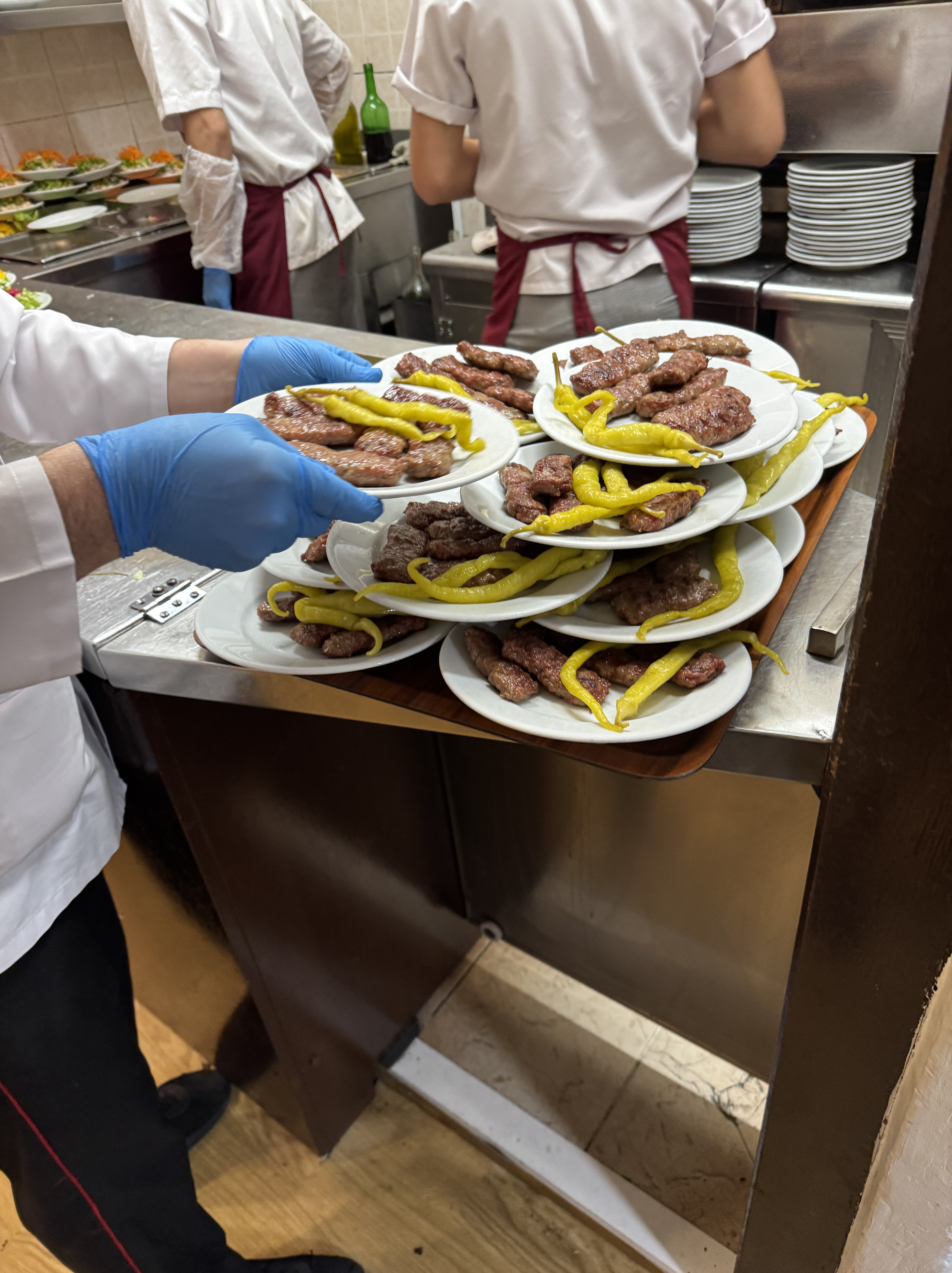
Food being prepared, everything fresh and delicious
To wash down all that kebab with tea and some sweet delicacies, we went to another historic place just a minute’s walk away. Again, we had to wait here. Hafız Mustafa is one of the most renowned spots in Istanbul for baklava and other desserts. They have branches all over Istanbul, but we visited the Sultan Ahmet branch. We enjoyed Turkish tea, coffee, and desserts, which were absolutely delightful.

Turkish tea, Turkish coffee, and Turkish dessert – a deadly combo
To walk off all that food, we set-off for a lovely walk. Even if you only have one day in Istanbul, I highly recommend this route, from the Blue Mosque to the Fatih Mosque. It’s a 45-minute walk, but it’s incredibly beautiful. Along the way, you’ll see so many lovely mosques, madrasas, and other stunning, buildings, you’re bound to enjoy it.
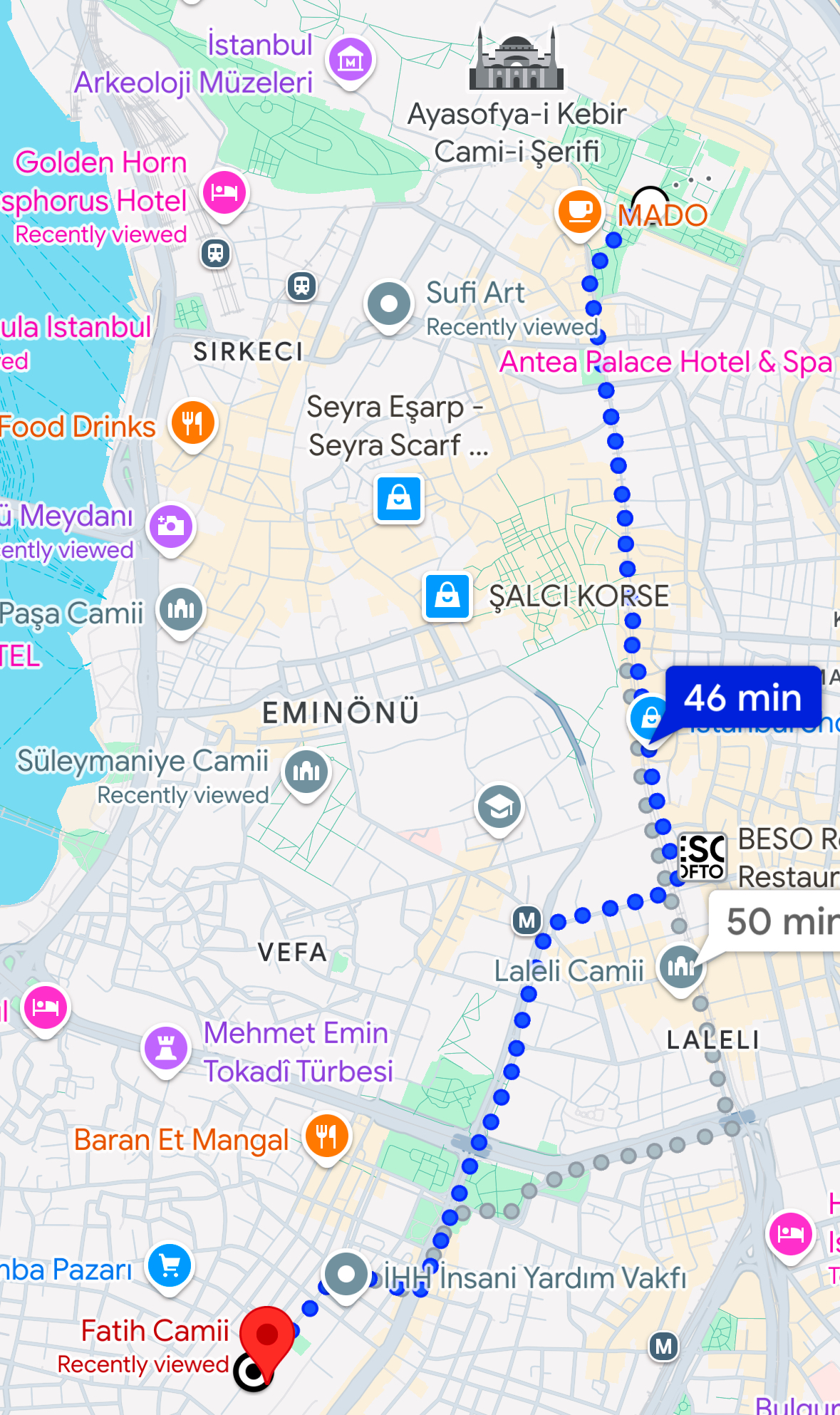
The 45-minute historic walk from the Blue Mosque to the Fatih Mosque
On this walk, we stopped at several historic places. First, we visited the resting place of a few sultans, including Sultan Abdul Hamid, where we recited Fatiha. Then, we stopped at the Gazi Atik Pasha Mosque for prayer. Next, we visited the Sinan Pasha Madrasa, which was established 500 years ago and is still used for studies. While we were there, a lecture on hadith was taking place by a famous Syrian scholar. We spoke to a few of the attendees and even received some free books.

Dars-e-Hadith taking place in the Sinan Pasha Madrassa
We continued our walk, admiring at the beautiful mosques, until we reached the Fatih Mosque, a truly blessed mosque steeped in history. The Fatih district itself is known for being more observant, and you’ll notice many Muslims here practicing their faith more openly. The mosque was originally built on the site of a church established by Constantine the Great in the 4th century. After conquering Istanbul, Mehmet Fatih built this mosque here.
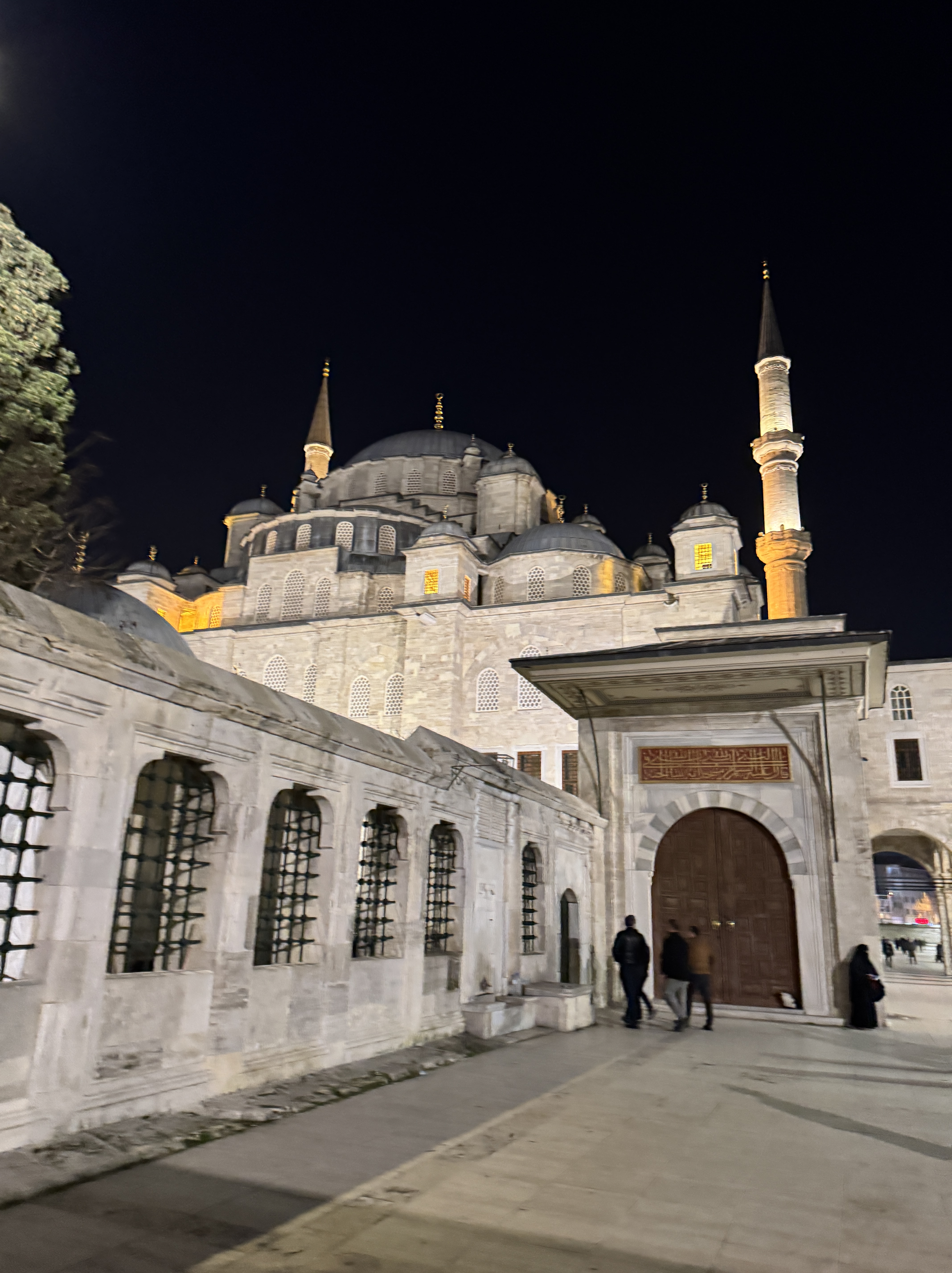
The Fatih Mosque Complex
We prayed Isha at the Fatih Mosque, and once again, the Imam’s recitation was incredibly moving, followed by adkhar that truly touched our hearts. We took a full tour of the mosque to appreciate its beauty and history and recited Fatiha at the maqam of Sultan Fatih, one of the greatest leaders of this Ummah. We also met Mamduh here.
After spending time at the mosque, Mamduh took us to try Boza, a famous drink dating back to before the Ottoman period. We walked to Vefa, perhaps the most renowned place in Istanbul to have Boza, established in 1876. The queues were massive, with people coming from all over just to try it. It seems that anything amazing to eat or drink in Istanbul was established over a century ago.
From there, we drove directly to Abu Ayyub Sultan Mosque. Unfortunately, it was closed, so we recited Fatiha outside (I’ve visited many times before). We walked around the square and bought a few items from the shops.
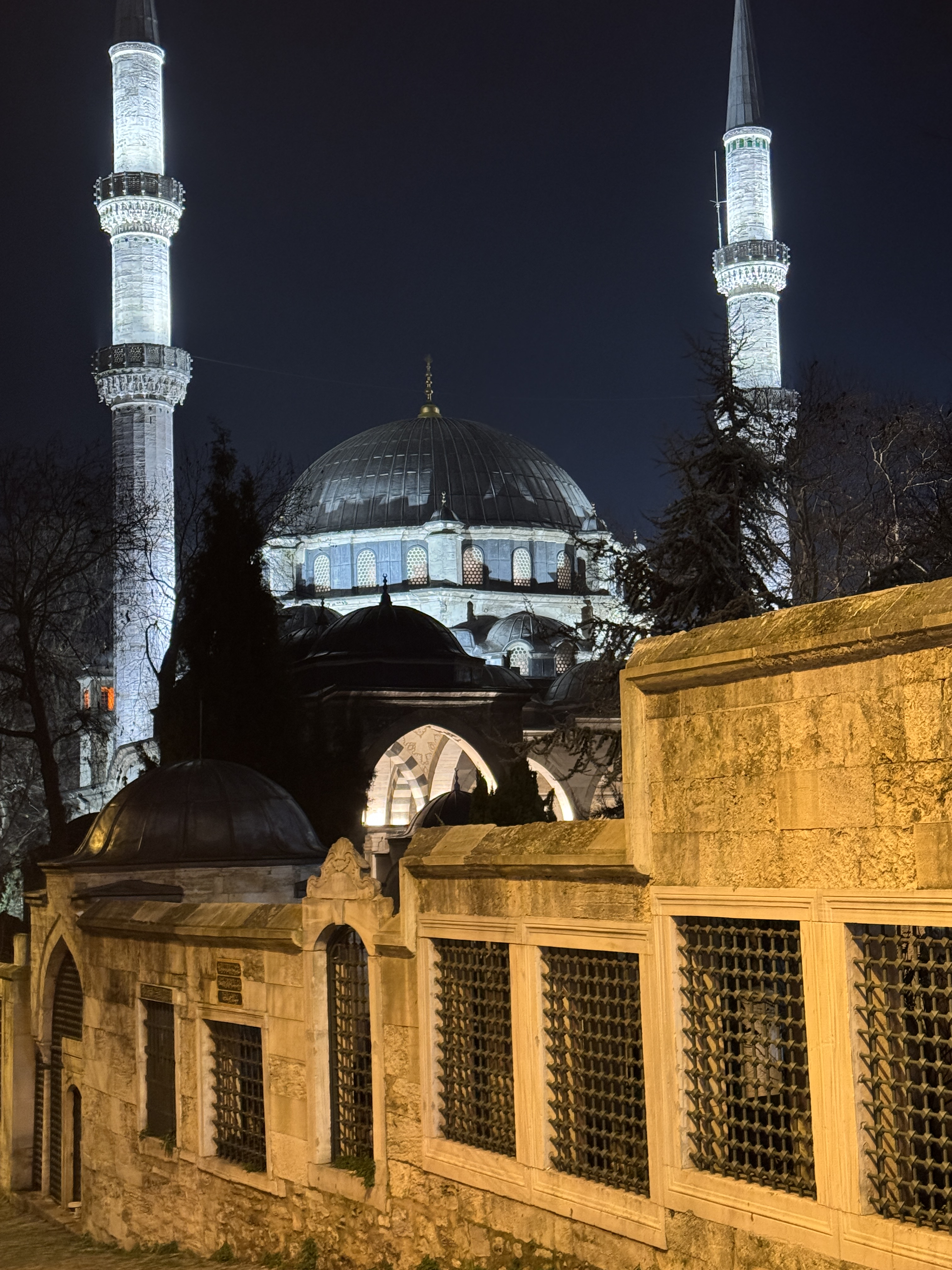
Mosque & Türbe of the Sahabi Abu Ayyub al-Ansari
Hungry again, we decided to eat at a lovely restaurant I’ve visited before, Kuzubeyi. As you enter, you’ll see a whole lamb being grilled. The food truly hit the spot, and even Mamduh, a native of Istanbul, who didn’t know about this restaurant, was amazed.

Turkish Tea & Ayran – the ultimate Istanbul refreshment duo
Mamduh then dropped us off at our hotel on the European side. We said farewell to him, as we were leaving the next day. Mamduh’s brother is doing his PhD in Edinburgh, and he hopes to visit us soon.
Sunday
It was our last day in Istanbul, and we still had plenty to do. Our morning started with Fajr prayer at Hagia Sophia, and oh, it was brilliant. After the Adhan, there was the recitation of Surah Yaseen, followed by a long and beautiful Jamaat, Dhikr, Salawat, and Dua. The experience was so uplifting, and Hagia Sophia was packed, it felt like Jumu’ah.
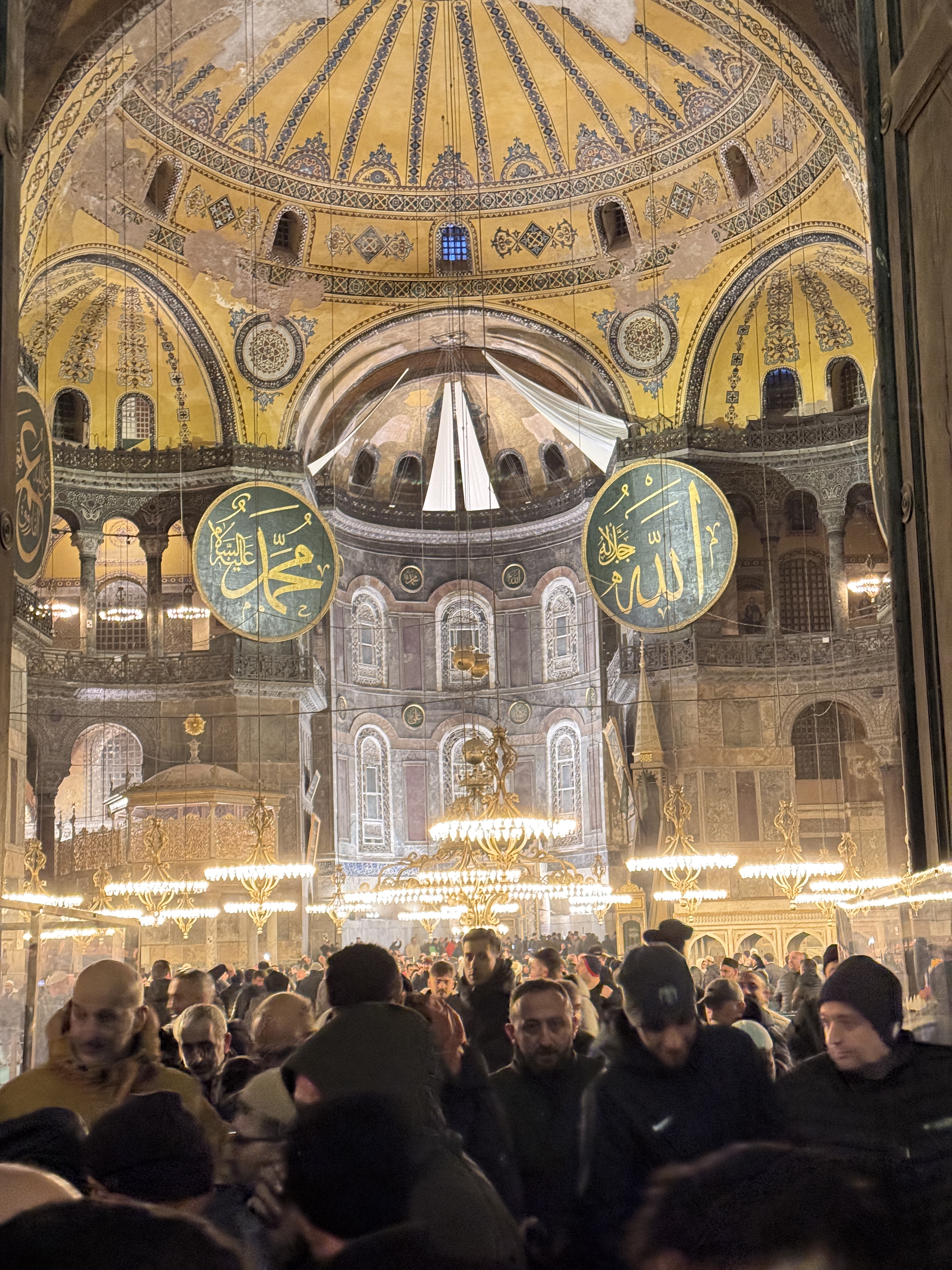
Hagia Sophia – packed for Fajr
After such a spiritually enriching morning, we decided to have breakfast. Now, the place we chose for breakfast might be considered a bit unconventional, you might even call it a bida’ah, lol. The reason we chose it was that two members of our group were flying back to the UK from Sabiha Gökçen Airport. So, we went to Coffee Manifest Yeldeğirmeni for a traditional Turkish breakfast in Kadıköy.
Kadıköy is a very secular, even anti-religious, area. There are plenty of tattoo shops, and no one looks visibly Muslim, it has a strange, soulless vibe. The lady serving us even dared to claim that Kadıköy was better than Üsküdar! I thought she was off her rocker. When I asked her what the best thing to see in Kadıköy was, she said, “Go to the sea.” After our friends left for the airport, Dr. Baig and I, running on only three hours of sleep and initially planning to rest, decided to ditch the idea of sleeping and put our foot on the accelerator to explore Istanbul further.

Ferry on the Bosphorus
We hopped on the ferry bus and crossed from Kadıköy to Eminönü. Ferry buses are a great way to explore the Bosphorus if you don’t want to book a boat cruise, which can be expensive. To use the ferry and underground services, you’ll need an Istanbul travel card, which you can easily get at a station machine. It’s the best and cheapest way to travel, with journeys costing anywhere between 50 pence to £1.
The ferry ride was wonderful. We ordered Turkish tea, listened to someone singing traditional Ottoman music, and admired the Istanbul skyline, particularly the stunning Suleymaniye Mosque. After getting off at Eminönü, we explored the fish market, walked through beautiful streets, and visited fine arts shops. Karaköy was especially lovely, an area with posh 5-star hotels, but also home to some of the best kunafa and other delightful Turkish desserts. Like many other food spots we visited, Güllüoğlu, established in 1843, was incredibly busy.

Fish Market
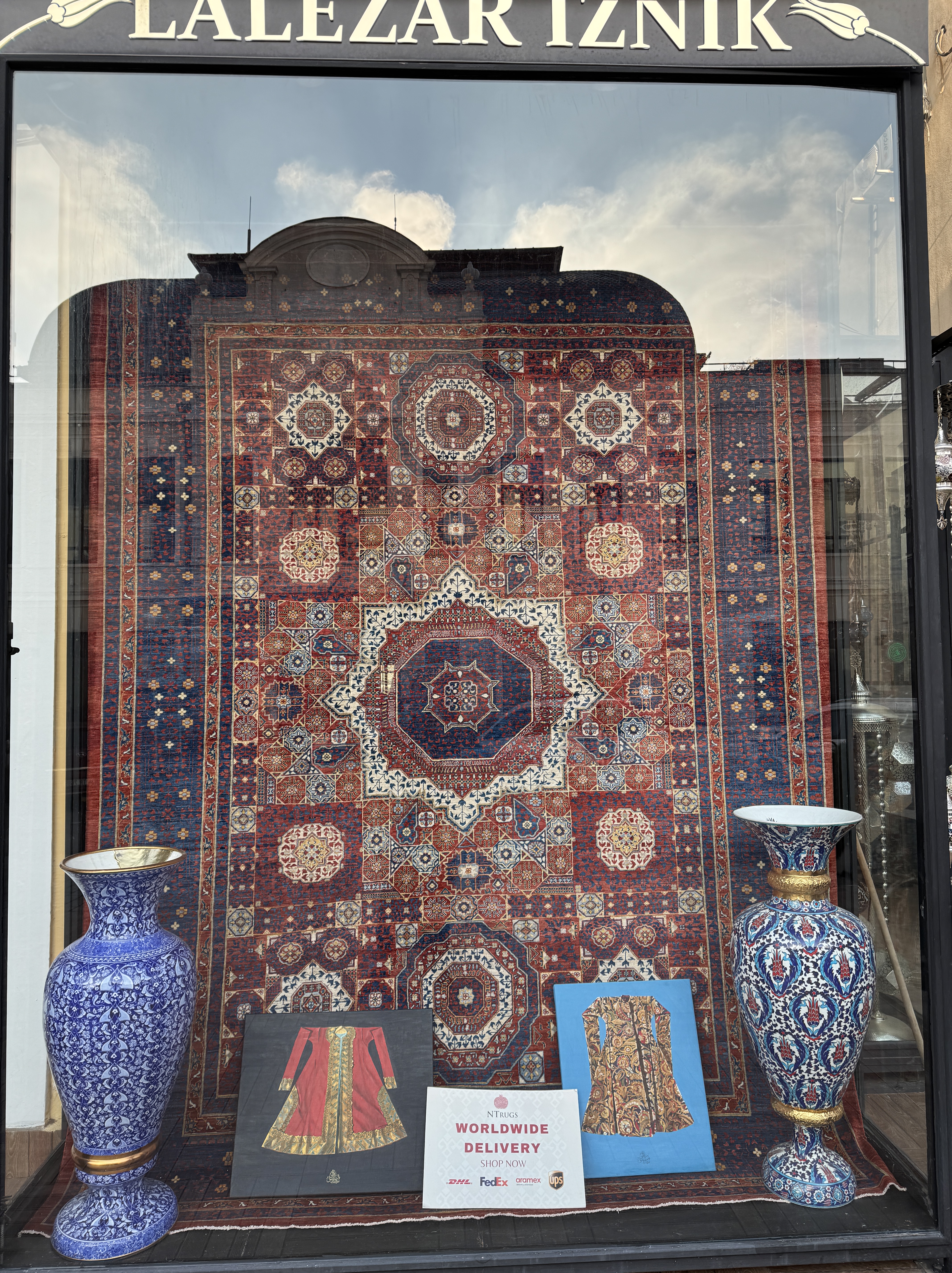
Fine Arts Shop in Karaköy

Little gems scattered around the city
After exploring Karaköy, we hopped on the ferry bus again to cross from Eminönü to Üsküdar. Üsküdar is a beautiful area, religious but with a distinct charm. It has plenty of great places to eat, arts and calligraphy shops, and is home to many Muslim Westerners.
In Üsküdar, Dr. Baig and I accidentally got separated. I didn’t have my other phone, so we couldn’t contact each other. We only had an hour to explore before rushing back to the hotel, as we had arranged a late check-out at 1 PM. Our flight was at 6 PM, so we needed to be at the airport by 4 PM at the latest. I assumed Dr. Baig would head to Aziz Mahmud Hüdayi’s mosque and resting place as we had planned, so I made my way there.
The mosque and the resting place of Aziz Mahmud Hüdayi attract hundreds of visitors daily. He was one of the greatest Sufi masters and scholars of the Ottoman period. As mentioned earlier, he was the Shaykh of Sultan Ahmed I, who built the Blue Mosque. Aziz Mahmud Hüdayi passed away in 1628 and was married to the granddaughter of Sultan Suleiman. His life is fascinating, and I highly recommend listening to Shaykh Abdal Hakim’s Paradigm of Leadership talk on him, it’s excellent and you can listen to it here.
When I got there, Dr. Baig wasn’t there. I performed ziyara, recited Fatiha, and then headed back to the main square in Üsküdar, thinking I might find him there. On my way, I stopped at Tabi, a lovely shop with reasonably priced gifts. Üsküdar doesn’t see many Western tourists, so the prices for food and shopping are very affordable.
As I walked back, I bumped into Dr. Yahya Nurgat, who, out of the blue, pulled me aside and told me that Dr. Baig was waiting at the Şemsi Pasha Mosque. I rushed there and finally found him. By this time, it was already 1 PM, and we were supposed to be at the hotel, checked out and ready to leave. Dr. Baig wanted to head straight back, but I insisted he visit Aziz Mahmud Hüdayi’s mosque. We rushed there in 10 minutes, and he absolutely loved it.

Sohbet in Üsküdar
On our way back, he admired the charming streets and shops of Üsküdar but couldn’t stop as we were in a hurry. We took the underground back to the hotel and arrived at 3 PM. The hotel staff, while polite, were understandably annoyed. We packed up quickly and were out in 15 minutes.
Now, the challenge of getting to the airport was on our minds. A taxi would cost £40, but due to traffic, we’d likely arrive late. Crossing the bridge from the European side to the Asian side (to Sabiha Gökçen Airport) is always a headache. So, we decided to take the underground, which was conveniently located just outside our hotel. With only one change, it would take us directly to the airport, even with our big suitcases. Best of all, it cost just £2 in total!
We arrived at the airport at 5 PM, just an hour before our flight at 6 PM. Thankfully, it was an internal flight to Ankara, so we managed to get through security and board just in time!
On our journey, we spoke about the Ottomans and the glorious history of Islam. We reflected on how fortunate the Turks are, Allah chose them to serve the deen in such a profound way. Just think about it: the Mamluks, the early Delhi Sultanate, the Seljuks, and the Ottomans were all Turks. Each of these dynasties played a critical role in preserving and spreading Islam. What an incredible legacy to be part of!
We were now heading to Ankara to meet 20 other scholars from the UK for a lovely week of intensive workshops and talks organised by the Diyanet at their headquarters.

Practical Tips for Istanbul
🛂 No Visa?
You can enter Turkey without a visa
📱 Stay Connected
Get an e-SIM from Gomoworld before you go
💳 Cards Are King
You can use your debit or credit card pretty much everywhere, keep a bit of Turkish Lira on hand for smaller spots
🚋 Public Transport is Awesome
Trams, ferries, metros, Istanbul has it. Grab an Istanbulkart to make life easier.
🏨 Where to Stay
We stayed at the Golden Horn Bosphorus Hotel, just a 10-minute walk from Sultan Ahmet. Great location and only £50 a night for a double room.
🚖 Airport Hacks
Uber works, but traffic can be wild, especially crossing the Bosphorus. The underground metro is your best friend—fast, cheap, and stress-free.
🛥️ Ferry Fun
Hop on a ferry bus to cross the Bosphorus—it’s super cheap and offers stunning views
🛍️ Shopping Spots
For affordable and authentic gifts, check out Üsküdar. It’s much less touristy, so you’ll get better deals than in the big markets.
 Ruz-e-Alast
This is a great guide to must see spots in Istanbul especially if you are short on time. Really enjoyed reading this. And especially the description of mosques to the mesmerising recitations.
LikeLike